Introduction
Let’s talk about annealing appliance parts. When you’re running huge batches of injection-molded plastic through the process, there’s really only one thing that matters: repeatable heat. If the heat isn’t even, you get warping, sink marks, and stress hiding inside the part. And that stuff always comes back to bite you later as field failures. So, we built our annealing solution around one simple goal: keep the heat tight and uniform across the whole batch. That way, you stop chasing part-to-part inconsistencies for good.
The Power, Voltage, and Geometry Breakdown
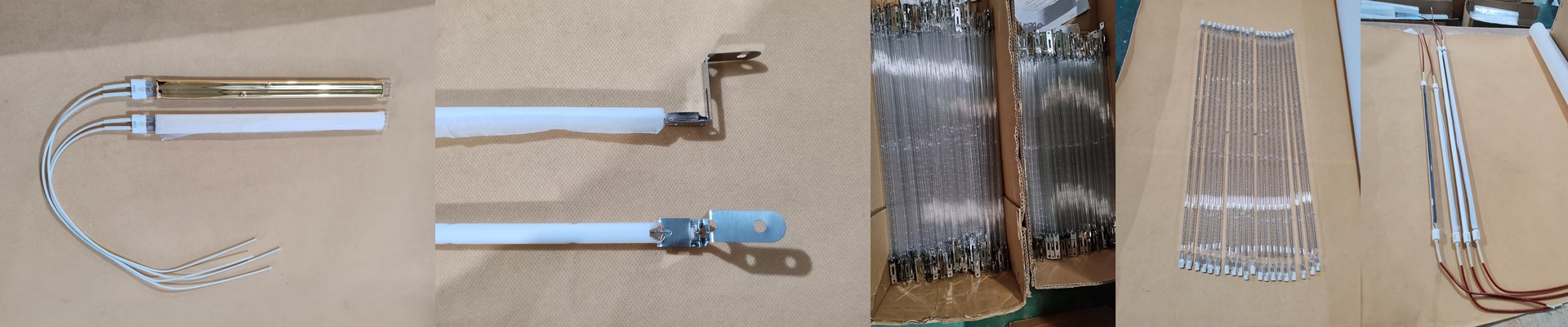
We spec out the heating system to deliver steady, controllable energy—even into those dense plastic runners and thick-walled components. Going with a 400V input gives you a clean power supply with plenty of headroom. It eases the load on your line and keeps voltage drops in check, even when multiple units are running at the same time. And the 300mm tube length? That’s intentional. It matches up with standard annealing oven widths and tooling setups, giving you enough radiant coverage to hit a full carrier of parts. No hot spots at the ends. Just even heat, all the way through. The wattage is tuned to hit annealing temps fast and then hold them steady. Quick ramp-up means shorter dwell time, which boosts your throughput. But here’s the catch: higher power density also cranks up the ambient heat inside the chamber. So you’ve got to make sure the lamp is matched to your machine’s cooling and airflow. If the cooling isn’t up to the task, the temperature control starts fighting an uphill battle—and the uniformity starts to drift.
Materials and Design: The Details That Matter
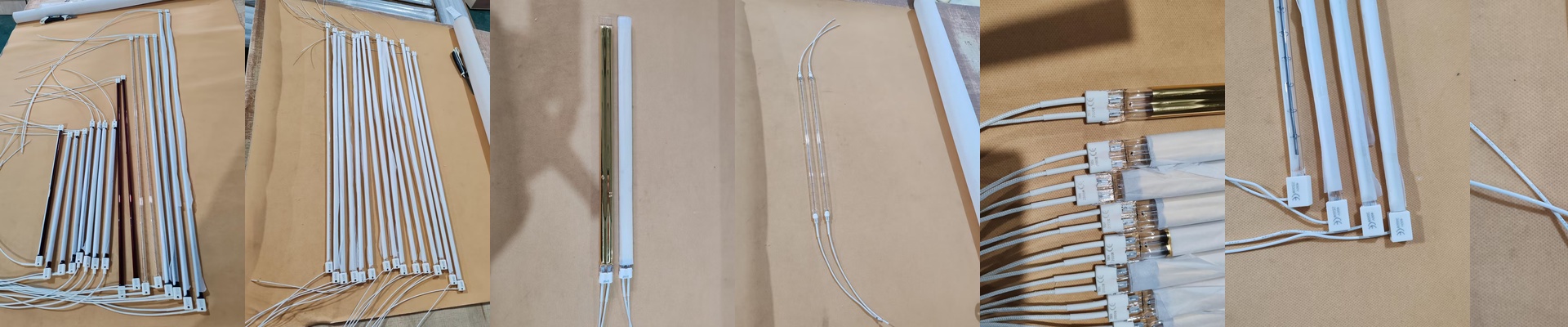
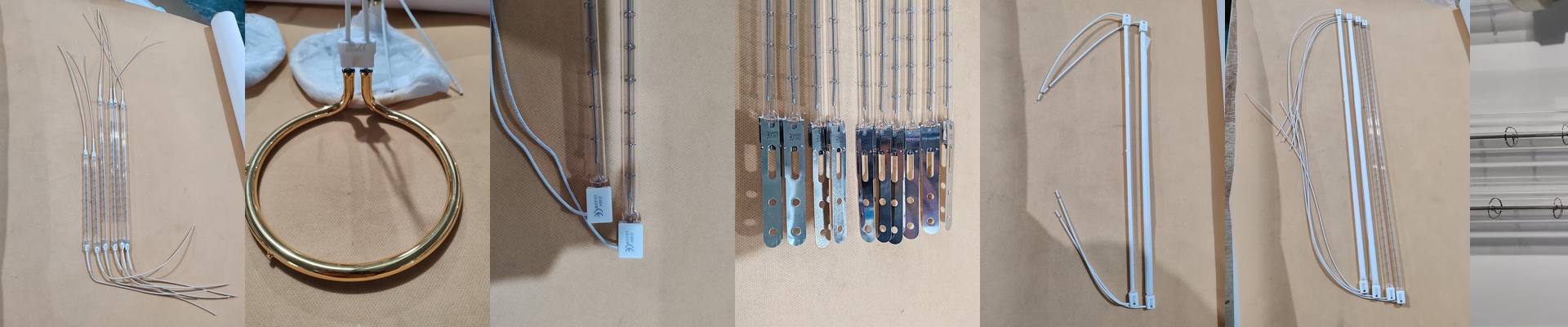
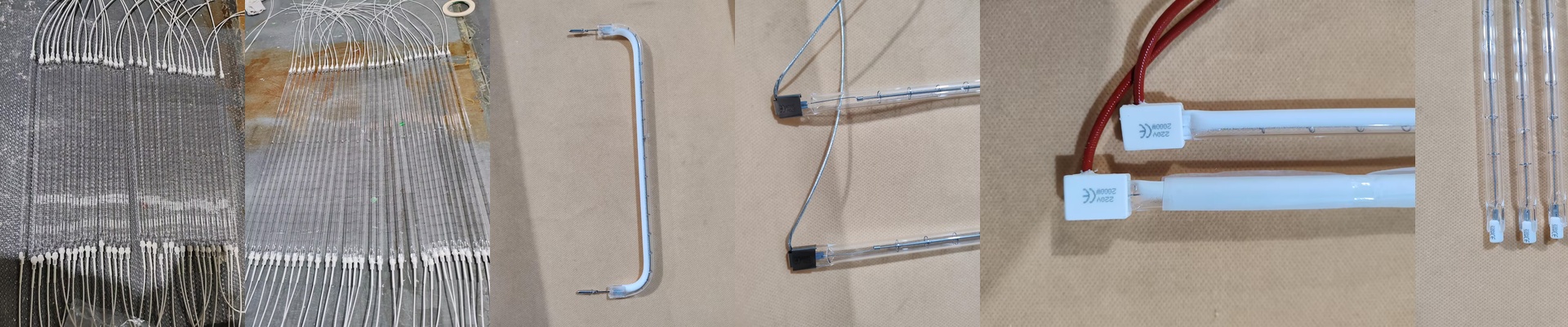
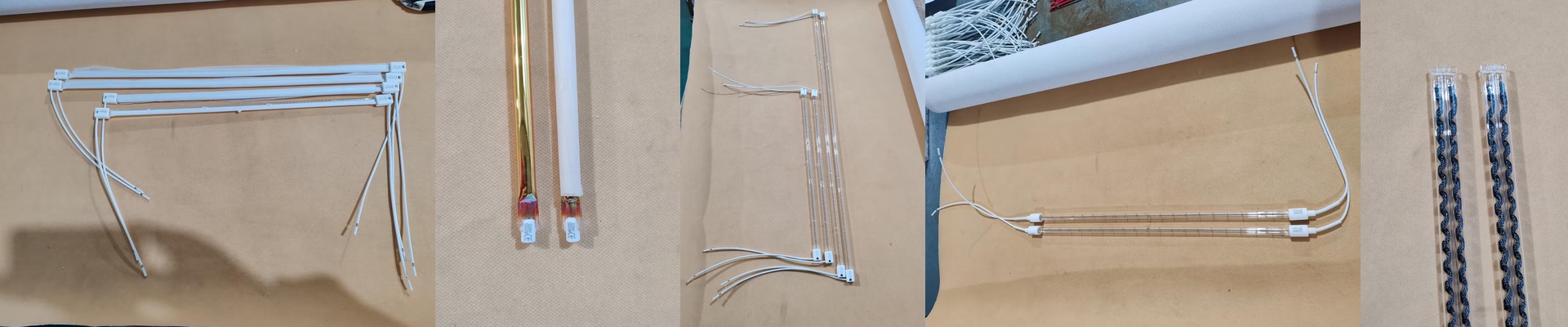
We use a shortwave halogen element inside a quartz tube because it delivers intense, directional infrared energy. That means you can drive heat straight into the plastic without scorching the surrounding hardware. And the reflective coating on the tube wall? Not just for looks. It bounces wasted radiant energy back onto the load. That improves temperature uniformity and lowers the power needed to hold your setpoint. On the shop floor, the connector choice really matters. R7s and SK15 terminals are built for high heat and repeated maintenance. They lock in solid, cut down on contact resistance, and handle the daily start-stop thermal cycling without breaking a sweat. That means fewer burnouts from loose connections and way less downtime when you swap out a lamp.
Real-World Performance: Stability, Shift After Shift
In appliance plastic annealing, you’re not just heating one part. You’re heating thousands per shift, with constant door openings, carrier loading, and ambient changes. Our setup keeps thermal uniformity across the entire batch, so your Cp/Cpk stays consistent. The payoff? Predictable cycle times, fewer scrapped carriers, and less rework on cosmetic surfaces. The trade-off is simple: you get high heat density for fast, repeatable annealing—but your oven’s cooling and insulation need to match the load. When everything’s in balance, the system runs shift after shift like a dependable workhorse—ready to drop in and keep your industrial annealing line humming.