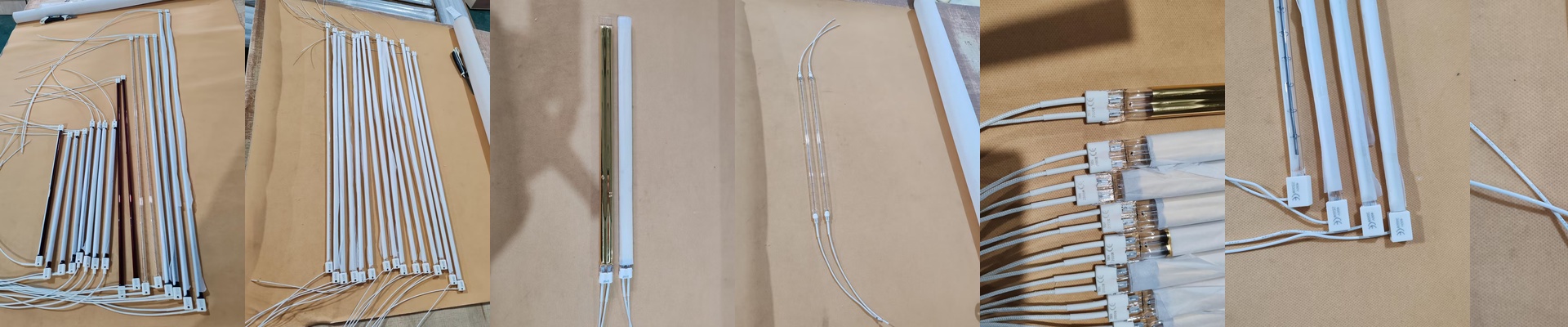
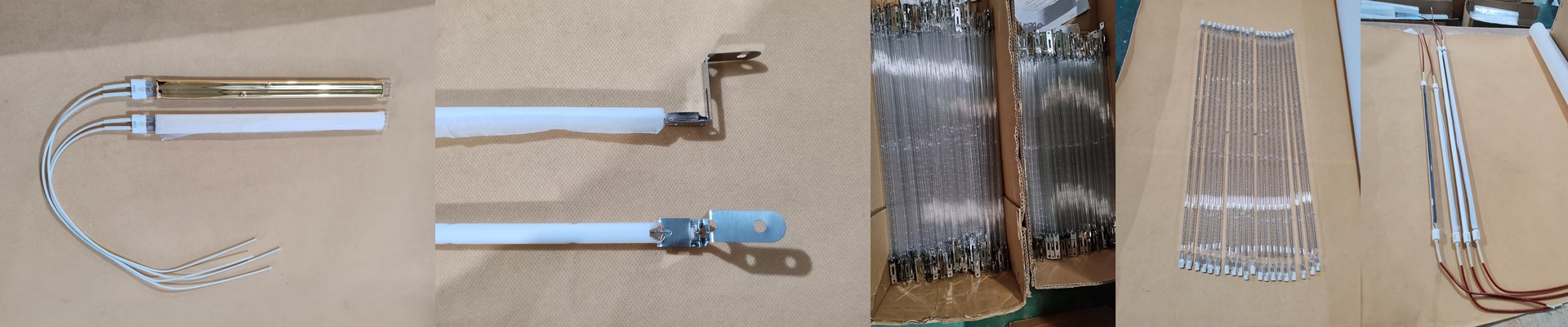
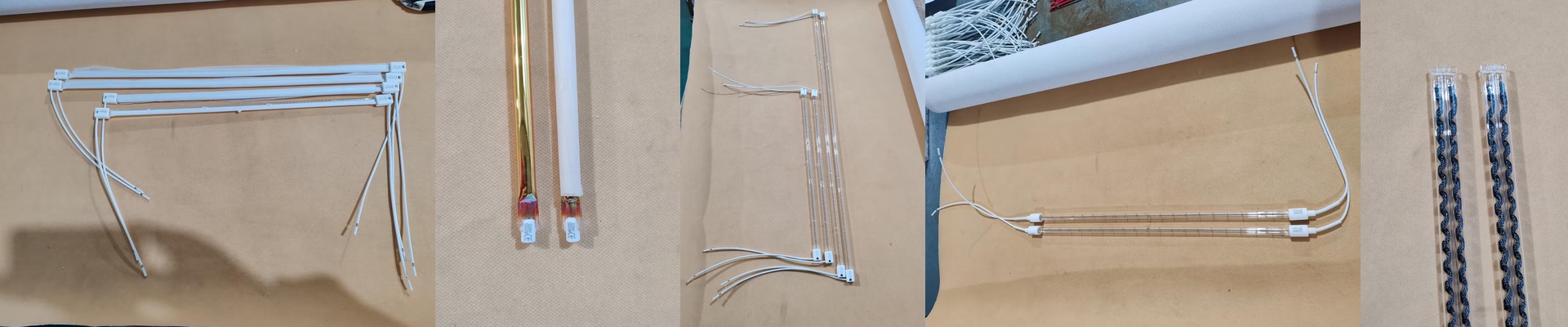
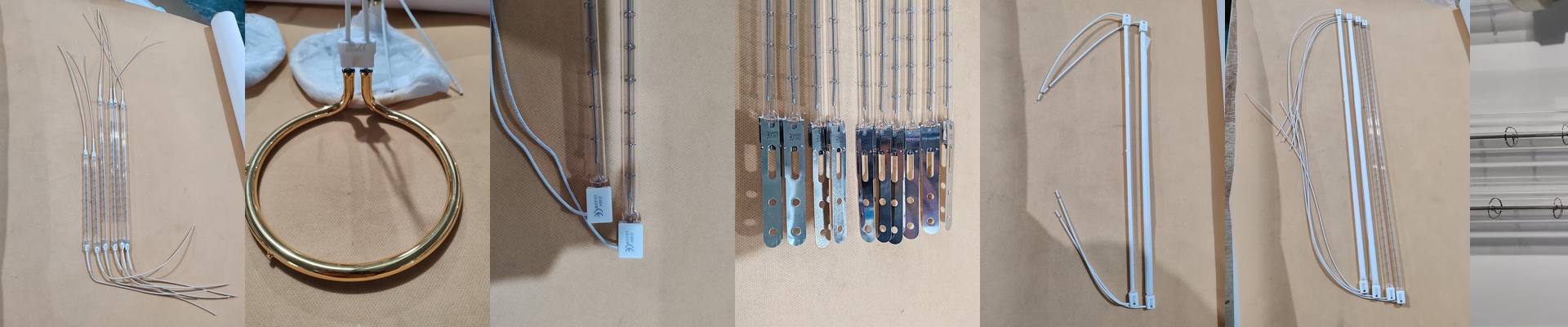
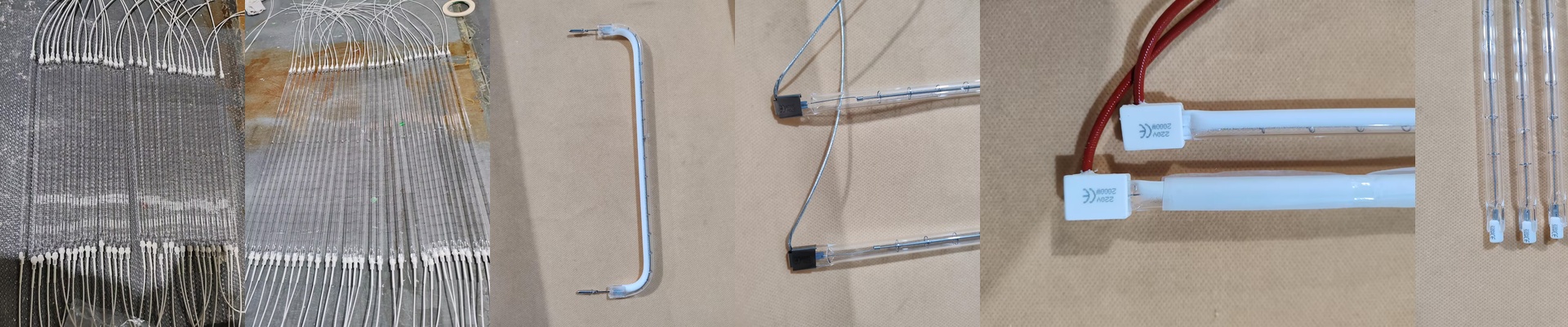
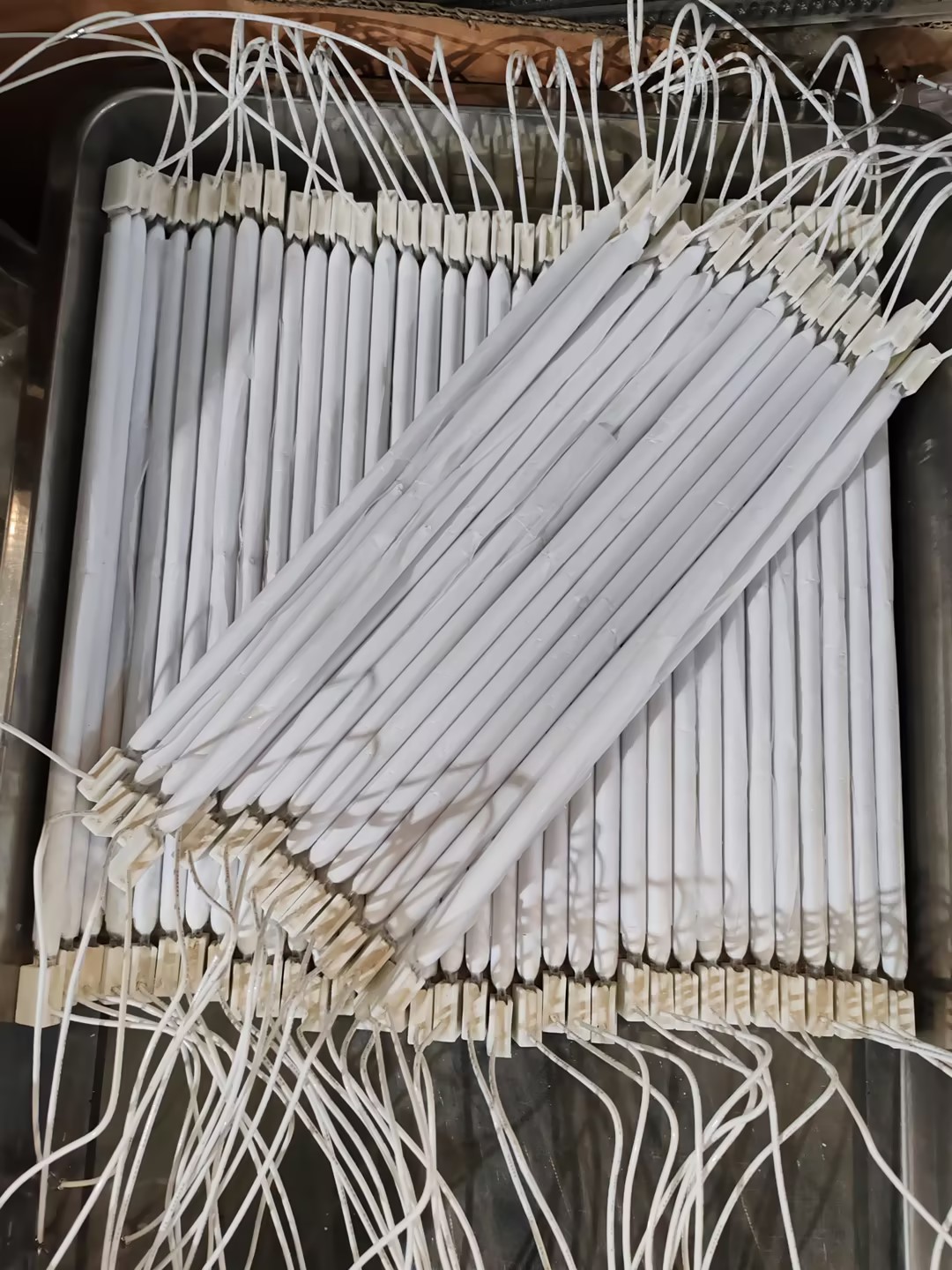
Let’s talk about the power behind the heat.
We built these halogen heat lamps for one reason: industrial machines that need intense, focused heat. The numbers back that up. These run at 400V and crank out up to 2500W, all packed into a tight 300mm tube. That’s a lot of power in a small space. And that’s the whole point. You get a ton of heat right where you need it, so the target heats up fast—without turning your whole plant into a sauna. But here’s the trade-off. Packing that kind of wattage into a short tube means you need a serious thermal setup. Your machine’s cooling and shielding have to be up to the task. If they aren’t, you’ll burn through lamp life and risk cooking the components nearby.
What’s inside, and why it matters.
The tube itself is quartz. We went with quartz because it can handle extreme heat and the shock of turning on and off quickly. No drama, just durability. Inside, the halogen cycle does its thing, keeping the filament stable. That means less blackening over time and a steady output that you can count on, especially when compared to standard infrared bulbs. We use R7s connectors because they just work. They give you a secure, straight-in connection that’s common on production machines, so swapping out a lamp is a simple, no-fuss job. And that coating on the outside? It’s there for a reason. It shapes the energy and directs it where you need it most, giving you better control and more repeatable results.
Where these lamps shine.
You’ll typically find these lamps in heating modules for plastic work—think PET blowing—and in drying and curing stations. The beauty is the combo: high wattage, shortwave response, and a small footprint. That means you can pack more power into less space. What does that look like for you? Faster line speeds. Tighter control over the heating window. Fewer temperature swings across the part. And because the connectors are standard, maintenance is a breeze. Just one thing to remember: make sure your holders, wiring, and cooling are all matched to that 400V, 2500W load. Get that right, and the rest just falls into place.